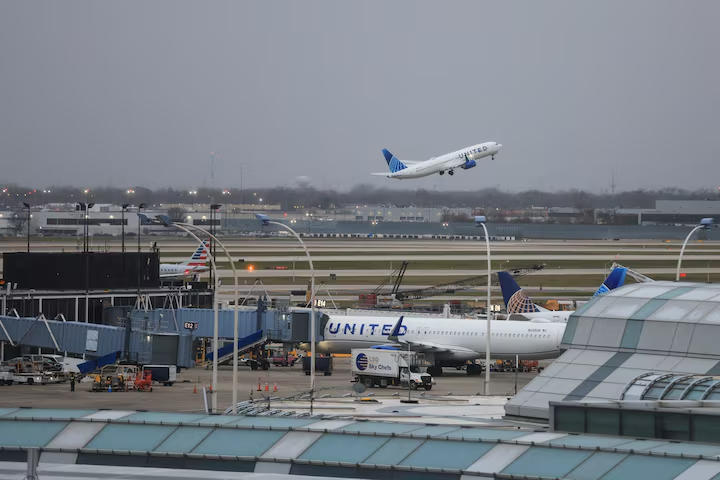
United and American compete to dominate Chicago’s O’Hare airport
United leads at O’Hare; American is mounting a comeback
Gate access and corporate contracts are the real battleground
The outcome could reshape hub economics and pricing power
CHICAGO, Jan 16 (Reuters) – Chicago O’Hare International Airport, long a crossroads of U.S. air travel, has become the front line in an intensifying contest between United Airlines (UAL.O), opens new tab and American Airlines (AAL.O), opens new tab.
What began as a post-pandemic rebuilding of flight schedules — with United restoring capacity faster and American ramping up more recently — has evolved into a contest over gates, routes, premium offerings and market share at one of the world’s most connected airports.
Analysts say the result could have long-term implications, as better gate access and more convenient schedules can help airlines win corporate travelers, who tend to pay higher fares.
American is rebuilding at O’Hare after its post-pandemic flying remained below 2019 levels, pointing to roots in Chicago that date to its first scheduled flight in 1926. The airline calls O’Hare its third-largest hub. United, headquartered in Chicago, is focused on defending — and extending — its lead at its hometown hub.
In late December, American unveiled its largest-ever spring schedule at O’Hare, adding about 100 peak-day flights and serving more than 75 destinations. The ramp-up would lift spring operations above 500 daily flights — roughly 30% more than last year — and extend seasonal transatlantic service to Paris and Dublin.
United is pressing its advantage. This summer it plans nearly 650 daily flights to about 200 destinations from O’Hare, reflecting its larger gate footprint and wider range of connections at the airport. The carrier says it has added thousands of local employees and plans thousands more by 2027.
Those investments appear to be paying off. United said it canceled about 1% of its scheduled flights at O’Hare last year, the lowest rate in its history at the airport. The airline also said it holds nearly a 20 percentage-point lead in local passenger share over American, a gap it attributed to sustained investment, faster growth and more reliable operations.
United says O’Hare is “solidly profitable,” a point its CEO, Scott Kirby, has used to question whether American’s comeback is sustainable. American CEO Robert Isom counters that Chicago can support two major hub airlines
“This (rivalry) is like nothing else in U.S. aviation,” said Joseph Schwieterman, a professor at DePaul University, whose recent analysis showed O’Hare grew faster than any other major U.S. hub last year in passenger numbers, flight departures and gate utilization.
The battle highlights a broader shift in airline competition: control of gates and schedules increasingly determines winners, especially among business travelers.