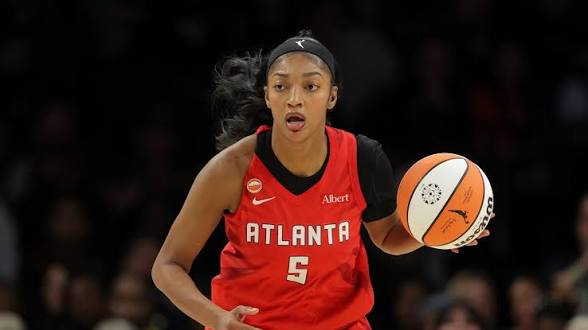
Angel Reese makes WNBA history with another dominant rebounding performance
Angel Reese has once again made headlines across the basketball world after delivering a dominant rebounding performance that placed her firmly in the conversation for WNBA history. Known for her relentless energy on the boards, physical style of play, and elite anticipation, Reese continues to redefine what impact looks like for a modern frontcourt player in women’s professional basketball.

This latest performance was not just another strong outing—it was a statement. Across the game, she controlled the glass on both ends of the court, repeatedly outmuscling opponents for defensive rebounds and creating second-chance opportunities on offense. In a league filled with skilled bigs and versatile forwards, her ability to consistently dominate rebounding battles stands out as a rare and valuable skill set.
A rebounding force from the start
From the opening tip, Reese set the tone. She positioned herself aggressively in the paint, boxing out early and reading missed shots before they even left the shooter’s hands. Her timing was impeccable, and she demonstrated an elite understanding of angles—often getting to rebounds a split second before defenders reacted.
What makes her rebounding especially dangerous is not just physical strength, but her motor. She doesn’t stop moving. Even when initially boxed out, she works around defenders, repositions, and attacks the ball at its highest point. That persistence has become a defining feature of her game.
In this performance, she turned those habits into production at an extraordinary level, collecting rebounds in bunches and shifting momentum every time her team needed a stop or a second chance.
Offensive boards that change games
One of the most impactful aspects of Reese’s game is her offensive rebounding. In this outing, she repeatedly extended possessions, giving her team extra opportunities against a defense that had already done its job.
Offensive rebounds are often demoralizing for opponents. A well-contested shot that should end a possession suddenly turns into another scoring chance. Reese thrives in those moments. She reads missed shots off the rim, crashes from the weak side, and uses her physicality to carve out space in crowded paint areas.
Her ability to secure offensive boards often forces opposing teams to adjust their entire defensive scheme. Guards must collapse earlier, wings have to crash down, and bigs cannot fully commit to transition until she is boxed out—something that is easier said than done.
Defensive control and transition impact
While her offensive rebounding draws attention, her defensive boards are just as crucial. In this performance, she cleaned up possessions efficiently, preventing second-chance points and immediately triggering fast breaks.
Once she secures the rebound, she doesn’t simply reset play—she pushes it. Whether it’s an outlet pass or initiating the dribble herself, she helps convert defensive stops into offensive rhythm. This dual impact—ending possessions and starting new ones—makes her one of the most influential rebounders in the league.
Coaches often emphasize “finishing the possession,” and Reese does exactly that. Her rebounding ensures that opponents rarely get extended looks, even after contested shots in the paint.
Making WNBA history conversation
Performances like this are why discussions about WNBA history have begun to include her name in rebounding contexts. While the league has seen legendary rebounders over its history, the consistency and frequency with which Reese produces elite rebounding numbers as a young player is notable.
Her rebounding averages and single-game peaks have already drawn comparisons to some of the most dominant frontcourt players in women’s basketball history. Analysts often highlight not just the numbers, but the style: she rebounds through effort, positioning, and instinct rather than relying solely on height or athleticism.
This particular game added another layer to that narrative, as she reached milestones that few players in league history have approached in such a short span of time.
Physicality meets modern basketball
Reese’s style represents a blend of old-school and modern basketball. Traditionally, dominant rebounders relied heavily on size and brute force. Today’s game, however, demands mobility, versatility, and speed. Reese brings both.
She battles inside with traditional post players but also tracks long rebounds from perimeter shots. With the increasing emphasis on three-point shooting in the WNBA, rebounding has become more unpredictable, and her ability to read these changing dynamics gives her a unique advantage.
Her performance in this game highlighted how she adapts to different shot profiles, adjusting positioning based on whether the shot comes from mid-range or deep beyond the arc.
Team impact beyond statistics
While rebounding numbers are often the headline, Reese’s influence extends beyond the stat sheet. Her energy lifts teammates, and her physical presence changes how opponents attack the paint.
When she is controlling the boards, her team plays with more confidence. Guards take more calculated risks knowing there is a strong rebounder behind them. Defensively, opponents hesitate to drive into traffic because they know missed shots will likely be collected and converted into transition opportunities.
Coaches value players like Reese because they affect games even when they are not scoring heavily. In this performance, her rebounding dominance effectively functioned as a defensive anchor and an offensive catalyst at the same time.
Growing consistency and rising expectations
What makes this performance even more significant is that it is not isolated. Reese has developed a pattern of elite rebounding games, showing consistency that is rare for players early in their professional careers.
As expectations grow, so does attention from opposing teams. Scouts now game-plan specifically for her presence on the boards, often assigning multiple players to box her out or push her away from prime rebounding zones.
Despite this increased attention, she continues to produce. That adaptability is a key reason why her performances are generating historical discussion.
Media attention and fan reaction
Unsurprisingly, social media and sports analysts reacted strongly to the performance. Fans praised her hustle, while analysts pointed to her rebounding instincts as elite and sustainable.
Many noted that rebounding is one of the hardest skills to consistently dominate in professional basketball because it requires constant effort on every possession. Unlike scoring, where rhythm can fluctuate, rebounding demands focus on every single shot attempt—something Reese has demonstrated repeatedly.
Conclusion: a defining identity forming
As the season progresses, Angel Reese continues to solidify her identity as one of the league’s premier rebounders. This latest dominant performance adds another chapter to a rapidly growing career narrative built on toughness, consistency, and impact plays that shift momentum.
Whether or not she ultimately sets official league records, her influence on the game is already clear. She is changing how teams value rebounding and how opponents prepare for second-chance opportunities.
In a league where margins are often slim, players who control possessions are invaluable. And right now, Reese is proving that she belongs among the most impactful rebounders the game has seen.