Stephen Curry drops 29 points in return from knee injury as Warriors fall to Rockets
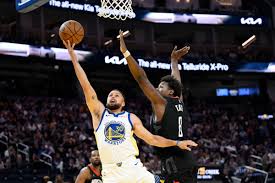
Stephen Curry made a highly anticipated return from a knee injury on Wednesday night, scoring 29 points, but it wasn’t enough to lift the Golden State Warriors past the Houston Rockets in a tightly contested matchup that ended in disappointment for the Bay Area side.
The game, played in front of a loud and energized crowd in Houston, marked Curry’s comeback after missing several games due to a minor knee injury that had raised concerns among fans about the Warriors’ early-season momentum. While his scoring touch was immediately evident, the Rockets’ young core delivered a balanced team performance that ultimately secured the win.
Curry’s Return Sparks Early Optimism
From the opening tip, Curry looked comfortable and aggressive. The two-time MVP wasted no time testing his knee, moving sharply off the ball and calling for screens at the top of the arc. His first basket came within minutes—a smooth pull-up three-pointer from well beyond the line, a familiar sight for Warriors fans.
Curry finished the first quarter with 11 points, showing no visible hesitation in his movement. His shooting rhythm, footwork, and off-ball cuts all suggested that the injury had not significantly impacted his offensive mechanics. Every time he touched the ball, the Rockets’ defense shifted attention toward him, opening opportunities for teammates.
By halftime, Curry had already accumulated 17 points, keeping the Warriors within striking distance despite defensive lapses that allowed Houston to control stretches of the game.
Rockets Respond With Depth and Energy
While Curry provided the highlight moments, the Rockets leaned on their depth and youthful energy to maintain control. Houston’s guard rotation pushed the pace relentlessly, forcing turnovers and converting fast-break opportunities that kept the Warriors’ defense under pressure.
The Rockets’ frontcourt also played a crucial role, dominating second-chance points and limiting Golden State’s interior scoring. Their ability to crash the boards and extend possessions proved decisive in a game where both teams traded runs.
Unlike the Warriors, who relied heavily on Curry’s scoring bursts, Houston showcased a more balanced offensive approach, with multiple players contributing double-digit points. That balance became increasingly important in the second half as the Warriors attempted to mount a comeback.
Third Quarter Momentum Shift
The third quarter proved to be the turning point of the game. Curry continued to score efficiently, adding another 8 points in the period, including a deep three-pointer that briefly gave the Warriors a one-point lead. However, Houston quickly responded with a 12–2 run fueled by defensive pressure and transition scoring.
Turnovers plagued Golden State during this stretch. Miscommunication on switches and rushed possessions allowed the Rockets to capitalize repeatedly. Despite Curry’s efforts to steady the offense, the Warriors struggled to generate consistent stops on the other end.
By the end of the third quarter, Houston had rebuilt a comfortable lead, forcing Golden State into a catch-up scenario heading into the final period.
Fourth Quarter Push Falls Short
The Warriors entered the fourth quarter trailing but still within reach. Curry, as expected, took control of the offense, orchestrating plays and attempting to drag his team back into contention. He added another 10 points in the final period, including a pair of clutch three-pointers that cut the deficit to single digits.
At one point midway through the quarter, Curry’s back-to-back scoring possessions ignited hopes of a late Warriors surge. The bench stood, fans reacted, and momentum seemed to swing briefly in Golden State’s favor.
However, Houston remained composed. The Rockets answered every Warriors run with timely baskets, often exploiting defensive mismatches or converting second-chance opportunities. Their composure in late-game execution ultimately prevented Golden State from closing the gap.
A late turnover by the Warriors effectively sealed the outcome, allowing Houston to extend the lead in the final minute and run down the clock.
Curry’s Performance: Efficient but Demanding
Curry finished the night with 29 points on efficient shooting, along with several assists that highlighted his playmaking impact. His movement off the ball remained elite, and his shooting range continued to stretch Houston’s defense to its limits.
However, there was a visible reliance on him to generate offense. With key teammates inconsistent, Curry was frequently double-teamed, forcing him to either create difficult shots or pass out of pressure situations. While he handled these moments with typical composure, it underscored the Warriors’ broader offensive imbalance.
Postgame, the focus naturally centered on his health and workload. Returning from injury, Curry’s minutes were closely monitored, but his intensity suggested he was fully engaged and physically confident.
Warriors’ Broader Concerns
Despite Curry’s strong return, the loss highlighted ongoing concerns for Golden State. Defensive consistency remains an issue, particularly in transition, where Houston repeatedly found success. The Warriors also struggled with rebounding, allowing the Rockets multiple second-chance opportunities that shifted momentum at key moments.
Offensively, the team’s dependence on Curry was evident. When he was off the floor, scoring dried up significantly, placing additional pressure on the starting lineup to maintain leads or close gaps.
Coaching adjustments attempted to address these issues, including rotations designed to improve defensive matchups and spacing. However, Houston’s pace and physicality often disrupted those plans.
Rockets Continue Building Momentum
For Houston, the win represented another encouraging step in their development. The young roster continues to show improvement in decision-making, defensive rotations, and late-game execution. Beating a veteran team like the Warriors, even one adjusting to the return of a star player, adds confidence to their growing identity.
Their ability to maintain intensity for all four quarters stood out. Unlike previous seasons where late-game lapses cost them wins, this performance demonstrated maturity and improved discipline.
What This Means Going Forward
For the Warriors, the takeaway is mixed. Curry’s return is undoubtedly a positive sign, especially given his scoring form and apparent recovery from injury. However, the loss emphasizes the need for more consistent contributions across the roster if the team hopes to compete at the highest level.
Managing Curry’s health will remain a priority. While he showed no visible limitations, the team is likely to remain cautious with his minutes and workload in upcoming games.
For the Rockets, this win reinforces their progress as a competitive young squad capable of challenging established teams. If they continue to refine their defensive discipline and maintain offensive balance, they could become a serious playoff contender in the long term.
Final Thoughts
Stephen Curry’s 29-point return provided plenty of highlights and reassurance for Warriors fans, but basketball remains a team game. On this night, Houston’s collective effort outweighed Golden State’s individual brilliance.
The result serves as both a reminder and a warning: even with one of the greatest shooters in NBA history back on the floor, the Warriors must find greater balance and defensive stability if they want to turn performances like this into wins.