Iga Swiatek clearly distressed: Retires at Madrid Open after having vitals checked
Iga Świątek Clearly Distressed: Retires at Madrid Open After Having Vitals Checked

The tennis world was left in concern and disappointment after world-class Polish star Iga Świątek was forced to retire mid-match at the Mutua Madrid Open following visible signs of distress and a medical evaluation that included checks of her vital signs on court.
The unexpected scene unfolded during what had been anticipated as another strong run for the former world No. 1 on clay. Instead, spectators witnessed an unsettling turn of events as Świątek appeared increasingly uncomfortable before ultimately making the difficult decision to stop playing. The retirement immediately sparked concern across the tennis community, with questions raised about her physical condition, scheduling demands, and the broader toll of the professional tour.
—
A Sudden and Concerning Turn on Court
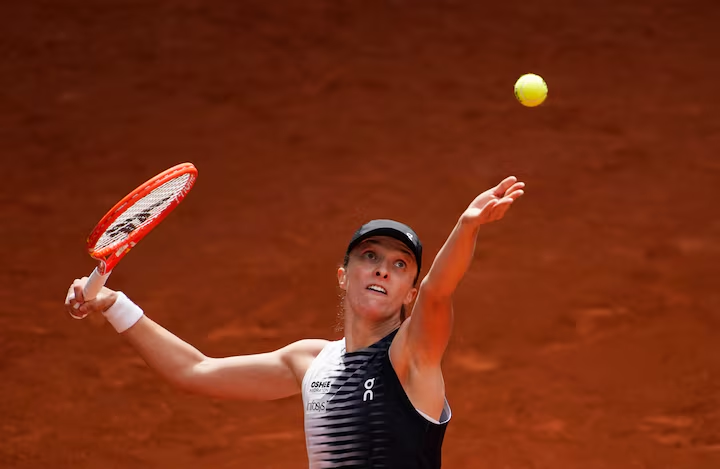
The match began with typical intensity from Świątek, who has built her reputation as one of the most dominant clay-court players of her generation. Her movement was sharp early on, and she appeared in control of baseline exchanges. However, midway through the opening set, observers began to notice subtle changes in her body language.
She appeared to be breathing more heavily than usual, occasionally pausing between points and looking toward her box with visible frustration. At first, it was unclear whether this was a minor physical issue, fatigue, or simply the result of a long rally sequence against a challenging opponent.
But as the set progressed, the signs became more pronounced. Świątek slowed between points, reduced her usual high-intensity footwork, and began gesturing toward her team. The chair umpire eventually requested a medical timeout after she signaled discomfort.
—
Medical Attention and Vital Checks
On-court medical staff arrived promptly to assess the situation. According to standard tournament procedures at the Mutua Madrid Open, players showing signs of distress are evaluated for immediate risks such as dehydration, heat-related illness, low blood pressure, or other acute conditions.
Reports indicated that medical personnel conducted vital checks, including blood pressure, heart rate, and general physical assessment. While full official medical details were not immediately released, the visible concern from both the player and medical team suggested the issue was significant enough to warrant caution.
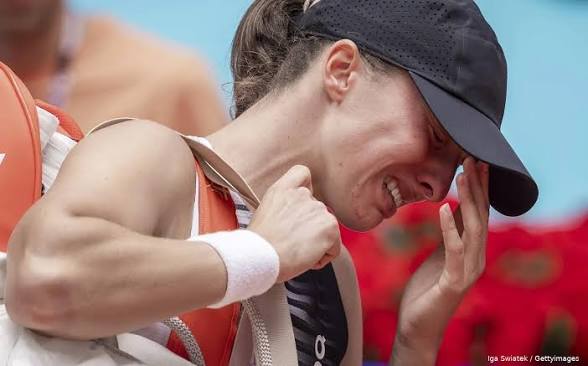
Świątek remained seated during the evaluation, speaking briefly with the tournament doctor and her coaching team. Her demeanor was described by courtside observers as subdued and fatigued, in contrast to her typically focused and energetic presence.
After a short consultation, she attempted to resume play, but it quickly became clear that she was not in a condition to continue at a competitive level.
—
The Decision to Retire
Shortly after returning to the court, Świątek made the decision to retire from the match. The announcement was met with a respectful but concerned reaction from the crowd, who had been expecting a tightly contested battle rather than a medical withdrawal.
Her opponent approached the net immediately after the decision was confirmed, offering a handshake and words of support. The chair umpire officially recorded the retirement, bringing the match to an abrupt end.
For Świątek, who has built a reputation for resilience and high fitness standards, the retirement marked a rare and notable moment in her career. Known for her discipline, endurance, and consistency, she has seldom withdrawn from matches unless absolutely necessary.
—
What May Have Contributed to the Distress
While no official diagnosis has been confirmed, several potential factors are being considered by analysts and commentators.
1. Physical Load and Scheduling Demands
The modern tennis calendar places immense strain on top players, particularly those who consistently advance deep into tournaments. Clay-court events like Madrid are physically demanding due to longer rallies and slower surface conditions.
Świątek has maintained a heavy competitive schedule in recent months, which may have contributed to accumulated fatigue.
2. Weather and Court Conditions
Madrid is known for its high altitude and fluctuating weather conditions, which can impact endurance and hydration levels. Players often report increased fatigue in these conditions, particularly during afternoon matches.
3. Possible Illness or Dehydration
Although no official statement has confirmed illness, symptoms such as visible fatigue, reduced movement intensity, and the need for medical evaluation often align with dehydration or temporary viral conditions.
Medical teams typically take a precautionary approach in such situations, especially when vital signs indicate abnormal readings.
—
Reaction from the Tennis Community
The retirement quickly became one of the most discussed topics in tennis circles. Fans, analysts, and former players expressed concern for Świątek’s wellbeing rather than focusing on the result of the match.
Many emphasized her reputation as one of the fittest athletes on tour, making the situation all the more surprising. Social media platforms filled with messages of support, with fans hoping the issue is minor and temporary.
Tennis analysts noted that while retirements are not uncommon on the WTA Tour, it is rare to see a top-ranked player like Świątek withdraw in such visibly distressed circumstances.
—
Impact on Her Madrid Campaign
The withdrawal marks an abrupt end to what had been a highly anticipated run at the Mutua Madrid Open. Świątek entered the tournament as one of the favorites, given her strong record on clay and previous success at major events on the surface.
Her exit now reshapes the draw significantly, opening opportunities for other contenders to advance further than expected.
From a ranking perspective, the impact will depend on how many points she was defending from the previous season, but early exits in major tournaments can influence the broader race for year-end standings.
—
Coaching and Team Response
Świątek’s coaching team has historically emphasized long-term health and consistency over short-term results. In similar situations, they have opted for caution rather than risk aggravating potential issues.
After the match, members of her camp were seen speaking with medical staff and tournament officials, though no detailed statements were immediately released.
Given her professional approach and disciplined training structure, it is expected that further medical evaluation will take place before determining her next tournament participation.
The Physical Demands of Modern Tennis
Świątek’s retirement also reignites broader discussion about the physical demands placed on elite tennis players. The modern game, particularly at the top level, requires sustained high-intensity performance across multiple surfaces and continents.
Clay courts, in particular, demand long rallies and extended physical engagement. Combined with travel, media obligations, and minimal recovery time between tournaments, even the most conditioned athletes can experience sudden physical breakdowns.
Experts often point out that women’s tennis, like the men’s game, has seen a rise in intensity and athletic expectations, leaving little room for extended recovery during the season.
Historical Context of Mid-Match Retirements
While surprising, Świątek’s retirement is not without precedent in professional tennis. Many top players have withdrawn mid-match due to heat exhaustion, illness, or injury concerns, particularly in demanding tournaments such as Madrid, Rome, and the Australian Open.
What makes this case notable is the visible distress and immediate medical intervention, which suggests a more acute situation rather than a pre-existing injury being managed during play.
What Comes Next for Świątek
At this stage, the priority for Świątek and her team will be recovery and assessment. Depending on the severity of the issue, she may choose to rest and skip upcoming events to ensure full recovery.
Given her importance in the women’s game and her consistent presence at the top of the rankings, any extended absence would have significant implications for the tour landscape.
However, early indications from similar past situations involving elite athletes suggest that precautionary retirements often result in short recovery periods rather than long-term absences.
Fans Hope for a Quick Return
Despite the uncertainty, one consistent theme has emerged: widespread support for Świątek’s health and wellbeing. Fans across the globe have expressed hope that the issue is temporary and that she will return to competition soon.
Her popularity, built on a combination of dominance, humility, and professionalism, has made her one of the most respected figures in tennis today. That respect was evident in the immediate reaction to her retirement, which was marked more by concern than disappointment.
—
Conclusion
The retirement of Iga Świątek at the Mutua Madrid Open serves as a stark reminder of the physical and mental demands placed on elite athletes. While the exact cause of her distress has not been fully disclosed, the situation clearly required immediate medical attention and precautionary withdrawal.
For now, the focus shifts away from competition and toward recovery. The tennis world will be watching closely for updates, hoping that one of its brightest stars will return to full strength soon.
What remains clear is that even at the highest level of sport, health always comes first—and Świątek’s decision to step away mid-match reflects that priority above all else.